AI-assisted gemstone assessment
Discover the Story Behind Your Gemstone.
Explore your gemstones with AI-assisted visual assessments, gemological insights, and detailed reference information — right from your phone.
Three free assessments · No card required · Preliminary visual assessment, not a laboratory certificate
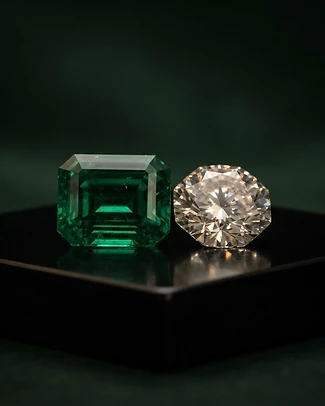
What you receive
Most likely identification, a confidence estimate, plausible alternatives and the published reference properties for the species — with the limits of a photograph stated plainly.
How it works
A photograph, a preliminary read, a record you keep.
Photograph Your Gemstone
Fill the frame with the stone in bright, even light. Loose stones and mounted jewellery both work, and you can upload a photograph you already have.
AI-Assisted Gemstone Assessment
The assessment compares the features visible in your photo with reference data for known species, and estimates how far the photo supports its own suggestion.
Explore Your Detailed Results
Read the most likely identification, plausible alternatives, visible characteristics, reference properties and what the photograph cannot establish — saved to your vault.
Assessing
Most likely identification
Blue sapphire
Photo-based estimate. Reference values shown separately.
Loose gemstones, mounted jewellery, or photos you already have.
The assessment reads visible features only. It does not measure refractive index, specific gravity or hardness, and it is not a laboratory certification.
Sample assessment
Open a report before you scan anything.
This is the real structure of an assessment, filled with a demonstration specimen. No account and no credit required.

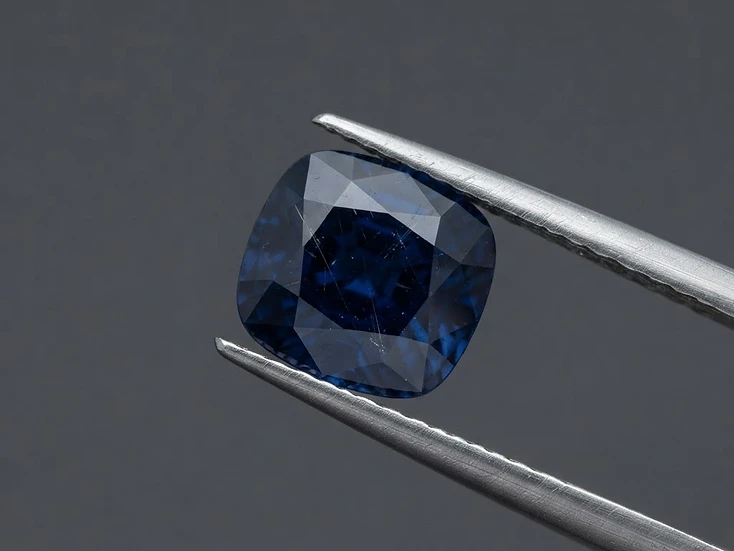
Blue sapphire
Cushion cut, colour-zoned
The tone, saturation and facet regularity in this photograph are consistent with blue sapphire. A photograph alone cannot separate natural from laboratory-grown corundum, or settle whether the stone has been treated.
Most likely identification
Blue sapphire (corundum)
Moderate confidencePhoto-based estimate — reflects how strongly the image matches known visual patterns, not a statistical score.
Plausible alternatives
Blue spinel
Overlaps sapphire in blue tone and brilliance; frequently indistinguishable in a photograph.
Laboratory-grown corundum
The same species as sapphire, so visible features may match exactly.
Blue glass
Can imitate tone, though facet edges and internal character usually differ under magnification.
Demonstration specimen. This is an illustrative sample of a preliminary AI-assisted visual assessment, not a real scan, a laboratory report or an authentication of any stone.
Honest by design
A useful first read, not a false certainty.
- A photograph is not a refractometer, a microscope or a scale.
- Natural versus laboratory-grown, treatment and origin cannot be settled from a photo.
- Every assessment states its confidence and its limits on the report itself.
Start with a photo of your stone.
Three free assessments, no card required. Keep going with an assessment pack or a Pro plan when you need more.